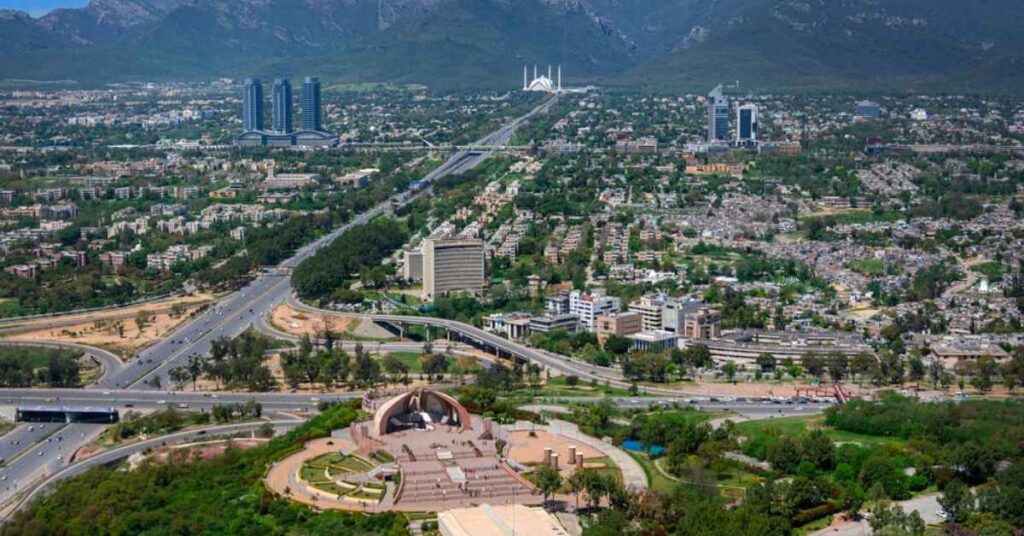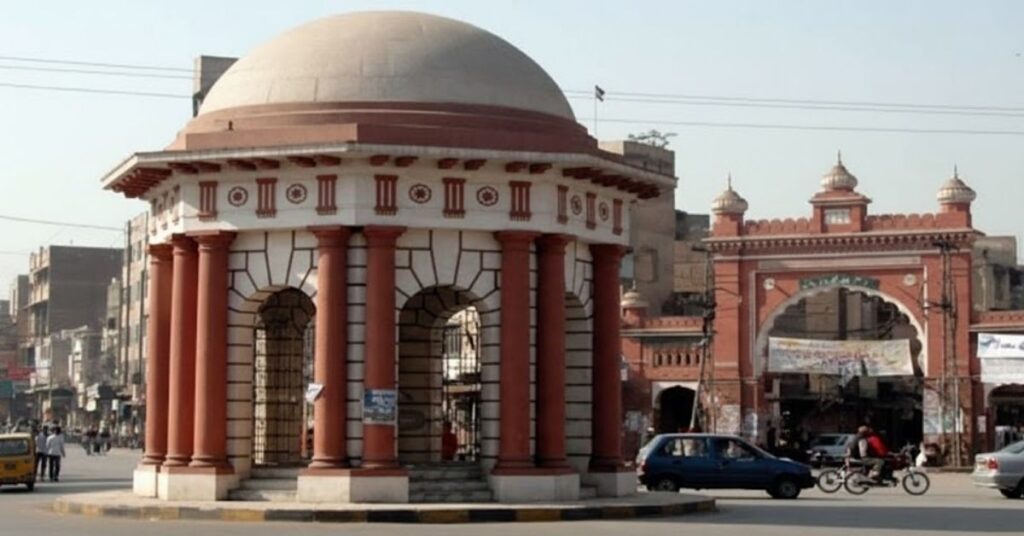
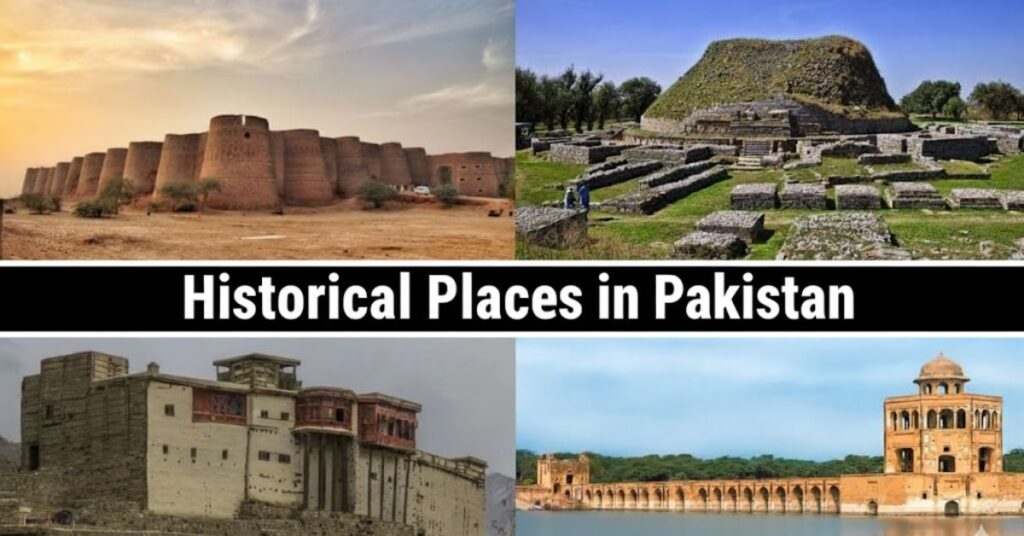
Pakistan is home to some of the best historical sites in Pakistan, offering a rare blend of ancient civilizations, Mughal grandeur, religious harmony, and architectural brilliance. From UNESCO World Heritage Sites to lesser-known archaeological treasures, the country showcases thousands of years of human history preserved across diverse landscapes.
This complete guide to historical places in Pakistan is designed for travelers, history enthusiasts, researchers, and cultural explorers who want to discover the top historical sites in Pakistan in one comprehensive resource. Whether you are fascinated by the Indus Valley Civilization, Mughal forts, sacred religious landmarks, or historic tombs and necropolises, Pakistan offers an unmatched heritage experience.
What You’ll Discover in This Guide
- Ancient cities that shaped early human civilization
- Iconic Mughal forts, palaces, and monuments
- Sacred Hindu, Buddhist, and Islamic heritage sites
- Travel tips, best visiting seasons, and cultural insights
By covering both must-visit landmarks and hidden historical gems, this article brings together all the essential information needed to explore the best historical sites in Pakistan responsibly and meaningfully.
Why Pakistan Is One of the World’s Richest Countries in Historical Heritage
Pakistan’s historical significance extends far beyond its modern borders. The region has been a crossroads of civilizations, religions, and empires for thousands of years, making it one of the most historically diverse countries in the world.
Ancient Civilizations
Pakistan is the birthplace of the Indus Valley Civilization, one of the world’s oldest urban cultures, with iconic sites like Mohenjo-Daro and Harappa. These ancient cities reveal advanced urban planning, drainage systems, and social organization that still impress historians today.
Religious Diversity
Over centuries, Pakistan has been home to Buddhist, Hindu, Sikh, and Islamic civilizations. Sacred places such as Takht-i-Bahi, Katas Raj Temples, Makli Necropolis, and Badshahi Mosque reflect deep spiritual traditions and coexistence across eras.
Strategic Trade Routes
Located along historic trade corridors, Pakistan connected South Asia, Central Asia, and the Middle East. Cities like Taxila flourished as centers of education, commerce, and cultural exchange, attracting scholars and traders from across the ancient world.
Mughal & Pre-Mughal Empires
The Mughal era left behind extraordinary architectural masterpieces including Lahore Fort, Rohtas Fort, Shalimar Gardens, and Noor Mahal. These structures demonstrate artistic excellence, military strategy, and royal lifestyles that defined the subcontinent’s golden age.
Together, these elements make Pakistan a living museum of human history, placing it firmly among countries with the best historical sites in Pakistan for cultural and heritage tourism.
Categories of Historical Places in Pakistan
To fully understand the depth of Pakistan’s heritage, it is important to explore its historical landmarks by category. This structured classification not only improves readability for users but also helps search engines clearly understand the topical relevance of the best historical sites in Pakistan. Each category represents a distinct era, purpose, and cultural influence that shaped the region over centuries.
Ancient Civilizations & Archaeological Sites
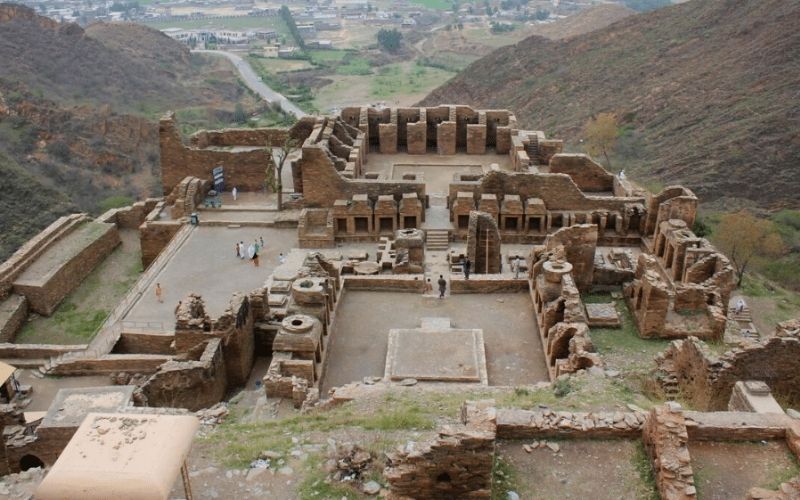
Pakistan hosts some of the oldest archaeological sites in the world, dating back more than 5,000 years. These locations reveal how early civilizations lived, governed, traded, and built advanced urban centers.
Key features of this category include:
- Planned cities with sophisticated drainage systems
- Evidence of early social organization and craftsmanship
- Ruins that provide insight into prehistoric lifestyles
Notable examples such as Mohenjo-Daro, Harappa, and Taxila highlight Pakistan’s role as a cradle of human civilization and place it among countries with the top historical sites in Pakistan for archaeological research.
Mughal Era Forts & Palaces
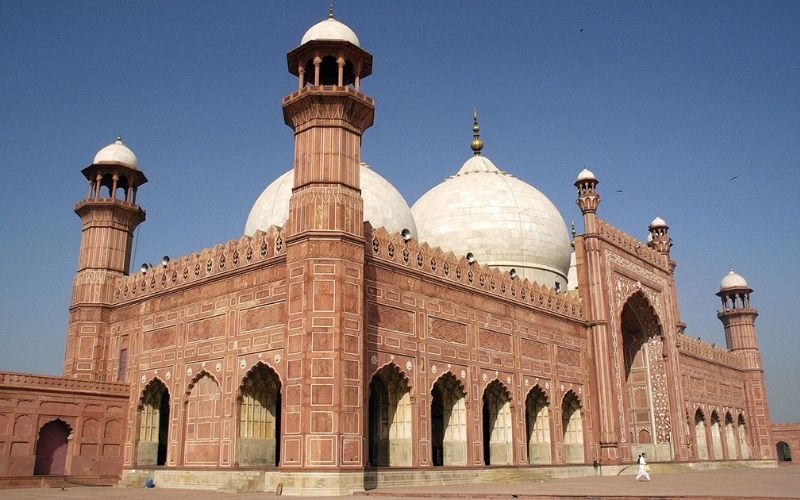
The Mughal period introduced architectural grandeur and military innovation to the region. Forts and palaces from this era reflect imperial power, artistic mastery, and strategic defense planning.
Common characteristics include:
- Massive fortifications and defensive walls
- Intricate tile work, frescoes, and marble decorations
- Royal palaces designed for administration and leisure
Landmarks such as Lahore Fort, Rohtas Fort, Noor Mahal, and Derawar Fort stand as powerful symbols of Mughal dominance and cultural sophistication.
Religious & Spiritual Heritage Sites
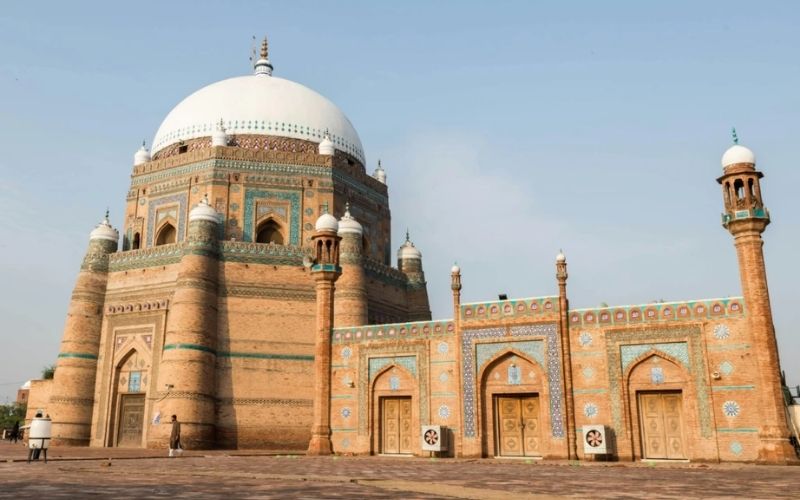
Pakistan’s religious heritage represents centuries of spiritual evolution and coexistence. These sites continue to attract pilgrims, historians, and cultural travelers from around the world.
This category includes:
- Buddhist monasteries and learning centers
- Hindu temples with mythological significance
- Grand Islamic mosques and shrines
Places like Takht-i-Bahi, Katas Raj Temples, Badshahi Mosque, and Makli Necropolis demonstrate why Pakistan is home to some of the best historical sites in Pakistan with deep spiritual and cultural meaning.
Historic Tombs, Necropolises & Monuments
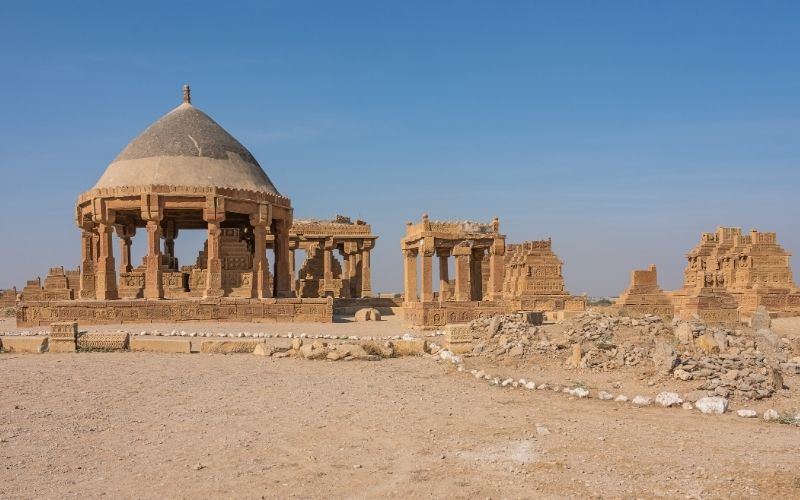
Tombs and monumental structures reflect the artistic, religious, and political values of their time. Many of these sites serve as final resting places for rulers, scholars, and saints.
Key elements of this category include:
- Elaborate mausoleums and funerary architecture
- Blend of Persian, Central Asian, and local design styles
- UNESCO-recognized heritage locations
Famous sites such as Makli Necropolis, Jahangir’s Tomb, and Iqbal’s Tomb preserve Pakistan’s legacy of honor, remembrance, and architectural excellence.
Most Famous Historical Places in Pakistan
Pakistan is home to some of the best historical sites in Pakistan, each representing a different era, civilization, and cultural influence. From ancient archaeological ruins to majestic Mughal forts and sacred religious landmarks, these places are not only historically significant but also visually breathtaking and culturally meaningful.
This section provides a detailed, site-by-site guide to the top historical sites in Pakistan, combining historical context, architectural insights, and practical travel information. Each landmark has been selected based on its global recognition, cultural importance, and contribution to Pakistan’s rich heritage.
Why These Sites Stand Out
- Recognized as UNESCO World Heritage Sites
- Represent thousands of years of continuous human history
- Reflect diverse religious and cultural traditions
- Offer unique travel and learning experiences
Whether you are a first-time visitor or a seasoned traveler, these destinations showcase why Pakistan ranks among countries with the best historical sites in Pakistan for cultural tourism and historical exploration.
What to Expect in the Following Sections
Each historical place covered below includes:
- A brief historical background
- Cultural and architectural significance
- Unique features that set it apart
- Helpful tips for visitors
This approach ensures that readers gain both knowledge and practical value, making this guide informative, engaging, and easy to navigate.
Mohenjo-Daro: Legacy of the Indus Valley Civilization
Mohenjo-Daro is one of the most iconic and best historical sites in Pakistan, representing the height of the Indus Valley Civilization that flourished over 4,500 years ago. Located in Sindh province, this ancient city is a UNESCO World Heritage Site and remains one of the world’s earliest examples of advanced urban development.
The name Mohenjo-Daro translates to “Mound of the Dead,” reflecting its long-forgotten past before modern archaeological discovery brought it back into global recognition.
Historical Background & Discovery
Mohenjo-Daro was discovered in the 1920s by archaeologists during excavations of the Indus Valley region. The city dates back to around 2500 BCE and is believed to have been one of the largest settlements of its time.
Key historical highlights include:
- Part of a vast civilization spanning modern-day Pakistan and India
- Advanced governance and standardized construction methods
- Evidence of organized civic planning and social systems
Its discovery reshaped global understanding of early human civilizations and placed Pakistan firmly on the map of ancient world history.
Urban Planning & Lifestyle of Ancient People
One of the most remarkable features of Mohenjo-Daro is its highly planned urban layout. The city was built on a grid system, with straight roads, uniform brick houses, and an advanced drainage system that even modern cities admire.
Notable aspects of daily life included:
- Multi-room houses with private wells
- Covered drainage and sanitation systems
- Public structures like the Great Bath, possibly used for rituals
These features highlight a sophisticated lifestyle that was centuries ahead of its time.
Why Mohenjo-Daro Is Among the World’s Oldest Civilizations
Mohenjo-Daro belongs to one of the earliest known urban civilizations in human history, alongside Mesopotamia and Ancient Egypt. What sets it apart is the absence of grand palaces or temples, suggesting a relatively egalitarian society.
Reasons for its global importance:
- Advanced city planning without visible royal structures
- Widespread trade with distant regions
- Uniformity in weights, measures, and construction
This uniqueness strengthens its position among the top historical sites in Pakistan and the world.
Best Time to Visit & Visitor Tips
The ideal time to visit Mohenjo-Daro is between October and March, when temperatures are moderate and suitable for exploration. Summers can be extremely hot, making outdoor visits difficult.
Visitor tips:
- Visit early in the morning to avoid heat
- Wear light clothing and comfortable footwear
- Carry water, sun protection, and a guidebook
- Respect preservation guidelines and restricted areas
Harappa: Archaeological Wonders of Early Human Settlements
Harappa is another cornerstone of the Indus Valley Civilization and ranks among the best historical sites in Pakistan for understanding early human development. Located in Punjab province, Harappa provides invaluable insights into ancient urban life, craftsmanship, and long-distance trade systems that existed thousands of years ago.
Alongside Mohenjo-Daro, Harappa confirms that this region was once home to one of the world’s most advanced prehistoric societies.
Ruins History & Excavations
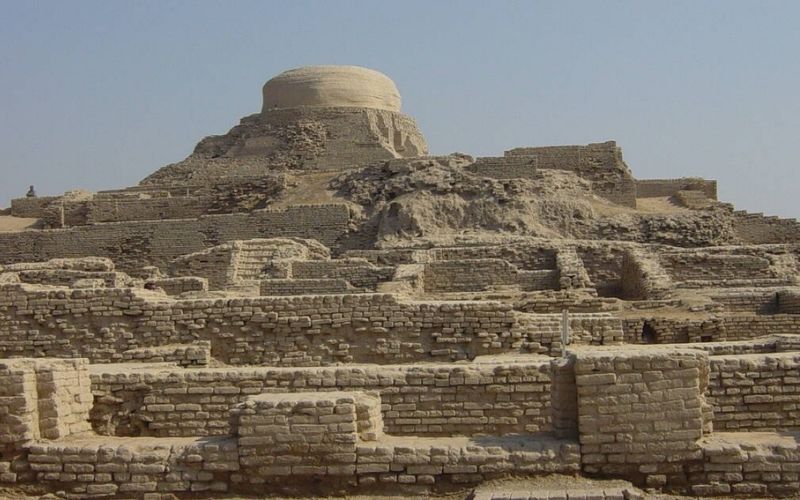
Archaeological excavations at Harappa began in the early 20th century and revealed a vast city built with standardized baked bricks. The ruins show evidence of multiple occupation phases, indicating that the city evolved over centuries.
Key discoveries include:
- Well-planned streets and residential areas
- Granaries and storage facilities
- Seals, tools, and pottery used in daily life
These findings help historians trace the rise and decline of early urban settlements in South Asia.
Harappa Museum Highlights
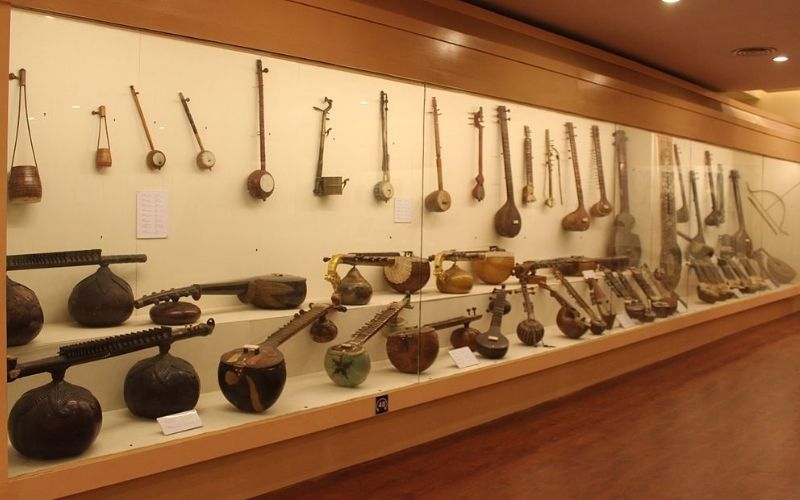
The Harappa Museum plays a crucial role in preserving and displaying artifacts recovered from the site. It offers visitors a deeper understanding of the civilization beyond the visible ruins.
Notable exhibits include:
- Terracotta figurines and ornaments
- Stone tools and seals with symbolic scripts
- Pottery showcasing artistic skill and utility
The museum enhances the visitor experience by connecting archaeological remains with historical interpretation.
Cultural Importance Today
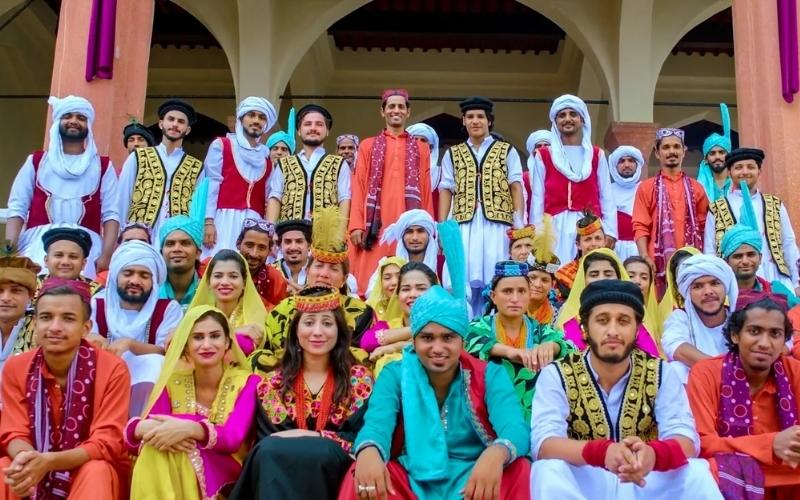
Today, Harappa stands as a symbol of Pakistan’s ancient roots and scholarly heritage. It attracts researchers, students, and cultural tourists from around the world who seek to explore one of the top historical sites in Pakistan.
Why Harappa remains culturally significant:
- Represents early innovation in urban living
- Strengthens Pakistan’s global historical identity
- Encourages preservation and heritage education
Harappa’s legacy continues to inspire modern studies of civilization, sustainability, and urban planning.
Taxila: Ancient Center of Buddhist Learning & Education
Taxila is one of the most significant ancient cities in South Asia and a key reason Pakistan is home to some of the best historical sites in Pakistan. Located near Islamabad, Taxila was once a flourishing center of education, culture, and trade, attracting scholars and students from across Asia.
Recognized as a UNESCO World Heritage Site, Taxila represents a golden age of learning where philosophy, medicine, mathematics, and religion were taught centuries before modern universities existed.
History of Taxila Civilization
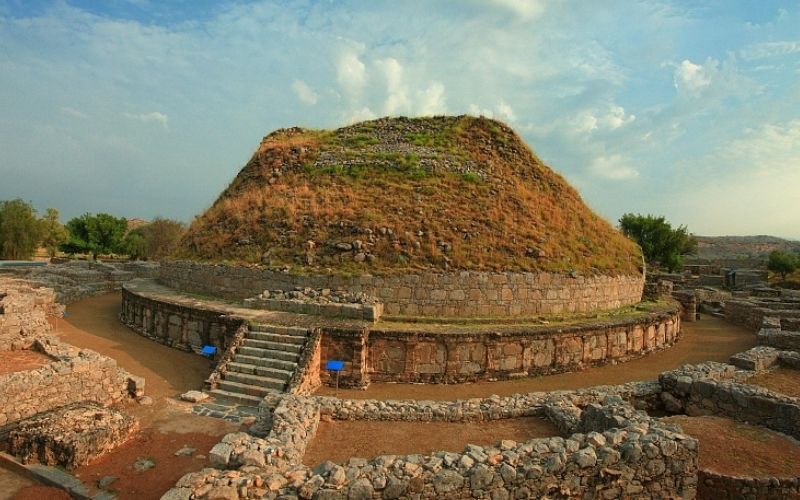
Taxila’s history spans several centuries, with roots dating back to at least the 6th century BCE. The city passed through multiple empires, including the Achaemenids, Mauryans, Greeks, and Kushans, each leaving its mark on the region.
Historical significance includes:
- One of the earliest known educational hubs in the world
- A melting pot of Greek, Persian, and South Asian cultures
- Strong political and economic influence in ancient Gandhara
This layered history makes Taxila one of the top historical sites in Pakistan for understanding ancient globalization.
Buddhist Monasteries & Ruins
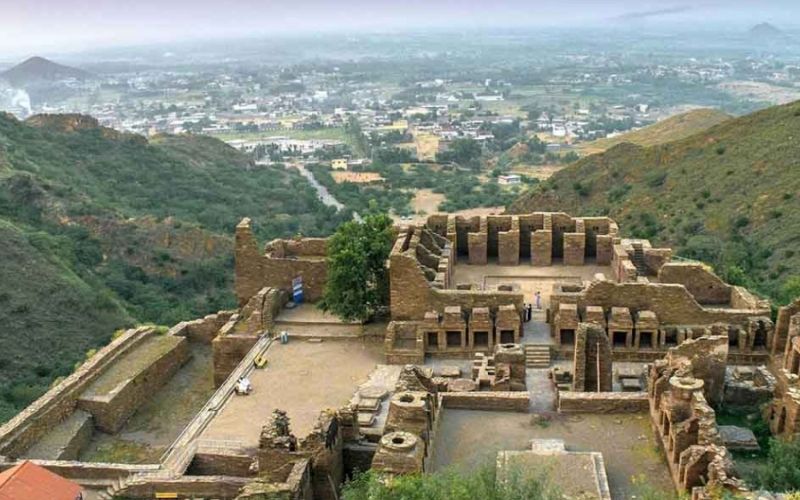
Taxila is renowned for its extensive Buddhist heritage. The region contains several monastic complexes, stupas, and meditation centers that highlight the spread of Buddhism through Gandhara.
Key features include:
- Well-preserved stupas and monastic cells
- Stone carvings depicting Buddhist art and teachings
- Architectural layouts designed for education and meditation
These ruins reflect the spiritual and academic life that once defined Taxila.
Taxila Museum & Artifacts
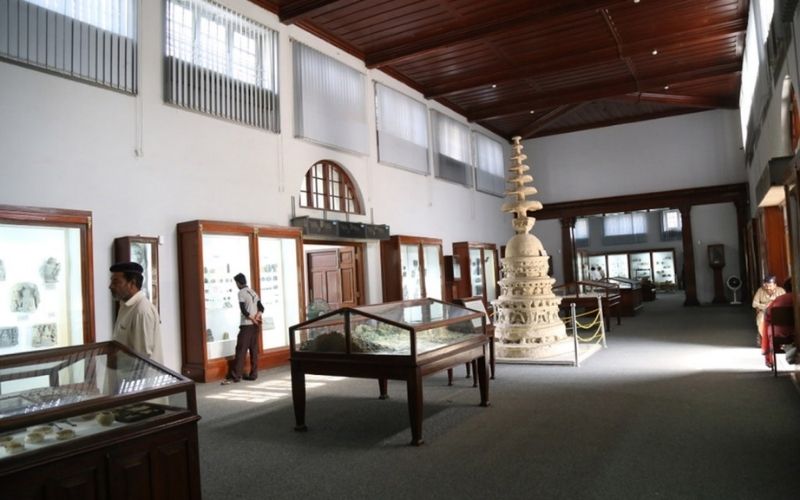
The Taxila Museum houses one of the finest collections of Gandharan art in the region. It provides essential context to the ruins scattered across the archaeological sites.
Museum highlights:
- Sculptures blending Greek and Buddhist artistic styles
- Coins, inscriptions, and everyday objects
- Artifacts that explain religious practices and daily life
Visiting the museum helps transform Taxila from ruins into a living historical narrative.
How to Reach Taxila
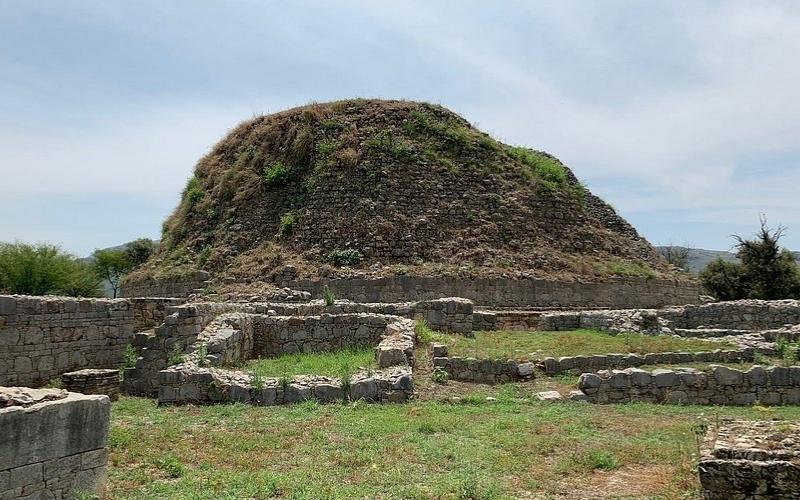
Taxila is easily accessible, making it one of the most visitor-friendly historical sites in Pakistan.
Travel options:
- Located about 35 km from Islamabad
- Reachable by car via GT Road or M-1 Motorway
- Public transport and guided tours available from Islamabad and Rawalpindi
Katas Raj Temples: Sacred Hindu Pilgrimage & Mythological Site
The Katas Raj Temples are among the most spiritually significant and best historical sites in Pakistan, especially for Hindu heritage. Located in the Potohar Plateau near Chakwal, this ancient temple complex dates back thousands of years and holds immense religious, architectural, and cultural value.
The site is centered around a sacred pond believed to be connected with Hindu mythology, making Katas Raj one of the top historical sites in Pakistan for religious tourism.
Religious Significance & Temple Legends
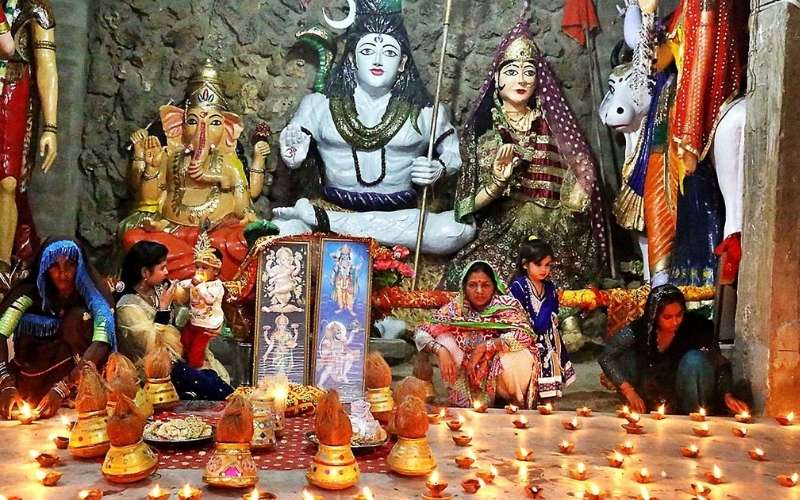
According to Hindu mythology, the sacred pond at Katas Raj was formed from the tears of Lord Shiva after the death of his wife Sati. Because of this belief, the temple complex is considered one of the holiest pilgrimage sites for Hindus in South Asia.
Religious importance includes:
- Association with ancient Hindu scriptures
- Pilgrimage destination for centuries
- Symbol of interfaith heritage in the region
The continued reverence for Katas Raj highlights Pakistan’s deep-rooted religious diversity.
Architectural Structure & Appearance
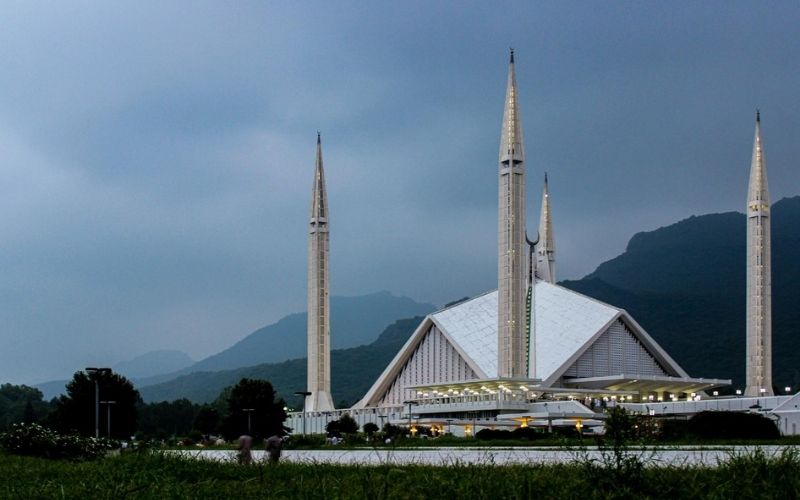
The temple complex consists of multiple structures built over different historical periods, reflecting diverse architectural influences.
Architectural highlights:
- Stone temples surrounding the sacred pond
- Intricate carvings and ancient masonry
- Blend of Hindu and regional architectural styles
Despite the passage of time, the site retains its spiritual aura and visual grandeur.
Restoration Efforts & Preservation Challenges
Over the years, Katas Raj has faced environmental and structural challenges, including water depletion and weather damage. Restoration initiatives have been launched to preserve this invaluable heritage site.
Key preservation efforts include:
- Structural repairs to temple buildings
- Revival of the sacred pond’s water level
- Increased attention from heritage authorities
These efforts aim to protect one of the best historical sites in Pakistan for future generations.
Visitor Guidelines & Best Time to Visit
The best time to visit Katas Raj Temples is from October to March, when weather conditions are mild and comfortable.
Visitor guidelines:
- Dress modestly to respect religious traditions
- Avoid littering and damaging structures
- Photography may be restricted in certain areas
- Guided tours enhance understanding of mythology and history
Takht-i-Bahi: UNESCO-Listed Buddhist Monastery Complex
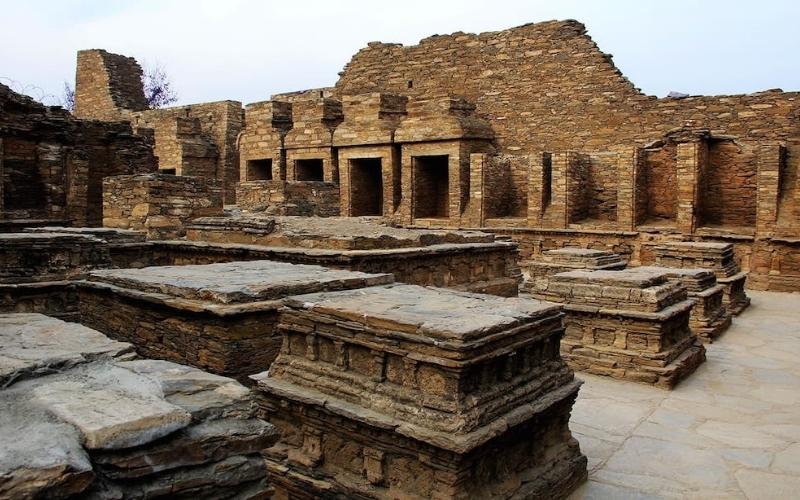
Takht-i-Bahi is one of the most well-preserved Buddhist monastic complexes in South Asia and ranks among the best historical sites in Pakistan for religious and archaeological significance. Situated on a hilltop in Khyber Pakhtunkhwa, this ancient site offers a remarkable glimpse into early Buddhist monastic life.
Declared a UNESCO World Heritage Site, Takht-i-Bahi showcases the spiritual, educational, and architectural excellence of the Gandhara civilization.
Construction History & Development Phases
The development of Takht-i-Bahi occurred over several centuries, beginning around the 1st century CE. The site evolved through multiple construction phases, each reflecting changing religious practices and architectural styles.
Major phases include:
- Initial establishment as a meditation center
- Expansion into a full monastic complex
- Later additions including ritual and educational spaces
These layers of construction demonstrate the long-term importance of the site within Buddhist history.
Stupa Court, Monastery & Temple Complex
The layout of Takht-i-Bahi is carefully designed to serve religious, residential, and educational purposes.
Key components include:
- Stupa Court used for worship and ceremonies
- Monastery cells for monks’ daily living
- Temple Complex featuring sacred shrines
The elevated location protected the site from invasions, contributing to its exceptional preservation.
Why Takht-i-Bahi Is a UNESCO World Heritage Site
Takht-i-Bahi earned UNESCO recognition due to its outstanding state of preservation and historical value.
Reasons for UNESCO status:
- Exceptional example of Buddhist monastic architecture
- Minimal damage despite centuries of exposure
- Strong representation of Gandharan civilization
Its recognition strengthens Pakistan’s position as a country with some of the top historical sites in Pakistan on the global stage.
Travel Tips & Accessibility
Takht-i-Bahi is accessible from major cities in Khyber Pakhtunkhwa and can be visited as a day trip.
Travel tips:
- Located near Mardan city
- Best visited during daylight hours
- Wear comfortable footwear for climbing
- Carry water, especially in warmer months
Lahore Fort: A Majestic Symbol of Mughal Authority and Design
Lahore Fort, also known as Shahi Qila, is one of the most celebrated Mughal-era structures and undoubtedly ranks among the best historical sites in Pakistan. Situated in the heart of Lahore, this majestic fort reflects centuries of imperial grandeur, architectural innovation, and political history.
As a UNESCO World Heritage Site, Lahore Fort is a must-visit destination for history enthusiasts and travelers seeking to experience the pinnacle of Mughal craftsmanship.
Historical Evolution of Lahore Fort
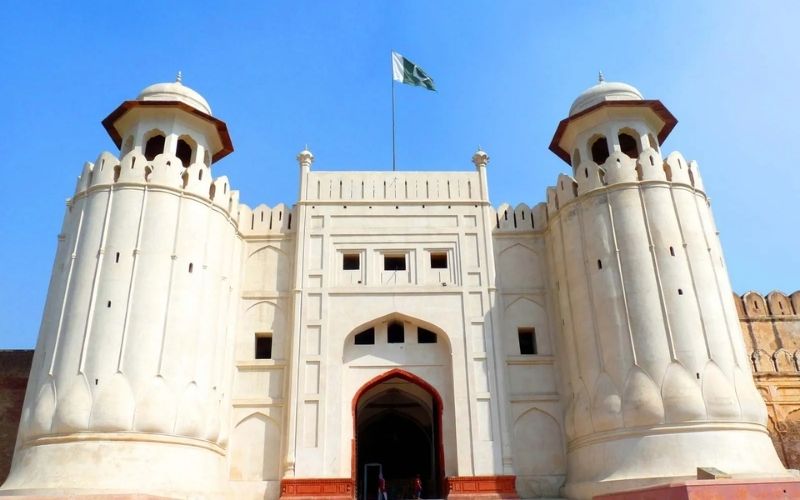
The origins of Lahore Fort date back to antiquity, but it gained prominence under the Mughal emperors in the 16th and 17th centuries. The fort underwent multiple expansions and renovations under rulers like Akbar, Jahangir, and Shah Jahan.
Historical highlights:
- Served as a royal palace, military fortress, and administrative hub
- Survived sieges, earthquakes, and restoration efforts over centuries
- Reflects layers of Mughal, Sikh, and British influence
This evolution underscores Lahore Fort’s enduring importance as a cultural and historical landmark.
Sheesh Mahal & Notable Structures
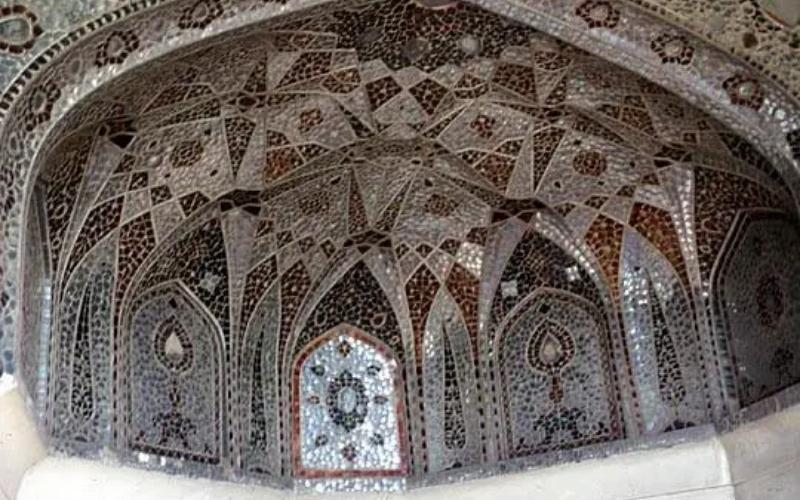
Within the fort complex, several structures stand out for their artistic and architectural brilliance.
Key features:
- Sheesh Mahal (Palace of Mirrors): Intricate mirror work and frescoes
- Naulakha Pavilion: Iconic white marble and decorative elements
- Diwan-i-Aam & Diwan-i-Khas: Halls for public and private royal audiences
These structures provide a tangible connection to Mughal aesthetics and royal life.
Restoration & Conservation
Restoration efforts have been critical in preserving Lahore Fort’s integrity. Government and international agencies have worked to maintain its historical features while allowing safe public access.
Conservation highlights:
- Structural reinforcements and repairs
- Fresco and mural restoration
- Protective measures for visitor safety
These initiatives ensure that future generations can experience one of the top historical sites in Pakistan in its near-original glory.
Lahore Fort Today: What Visitors Can Explore
Today, Lahore Fort attracts tourists, historians, and photographers from across the globe. Visitors can explore:
- Palaces and audience halls
- Gardens and courtyards
- Exhibits showcasing Mughal-era artifacts
Rohtas Fort: A Majestic Military Fortress of the Subcontinent
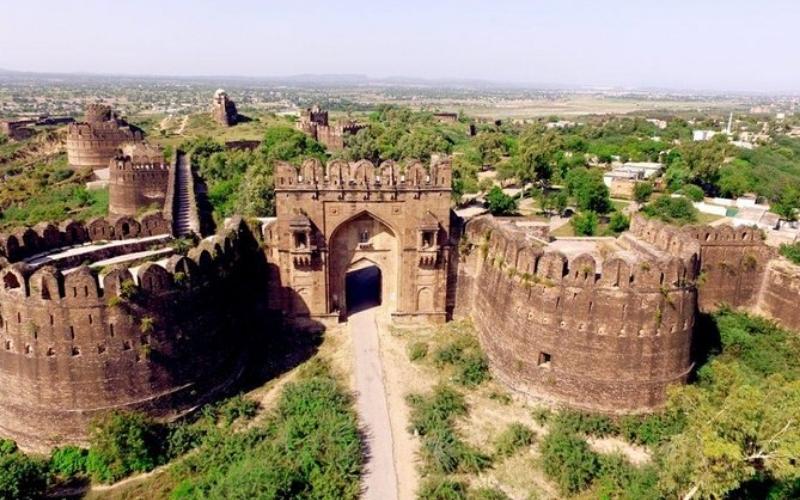
Rohtas Fort is one of Pakistan’s most strategically significant and architecturally impressive forts, making it a key entry on the list of best historical sites in Pakistan. Located near Jhelum in Punjab, this 16th-century fortress was built by Sher Shah Suri to defend against the Mughal expansion and to control the local tribes.
Declared a UNESCO World Heritage Site, Rohtas Fort is celebrated for its formidable walls, gates, and military design, reflecting the ingenuity of medieval fort construction.
Strategic Importance & History
Rohtas Fort was designed primarily for military defense and territorial control. Its strategic location atop a plateau allowed it to monitor surrounding areas and protect trade routes.
Historical highlights:
- Built between 1541 and 1548 CE by Sher Shah Suri
- Prevented Mughal re-entry into the region
- Functioned as a garrison and administrative center
The fort’s historical significance lies not only in its military purpose but also in its representation of Suri-era authority and planning.
Fort Gates, Walls & Defensive Design
Rohtas Fort is renowned for its imposing walls and 12 monumental gates, each designed for tactical advantage and aesthetic appeal.
Key features:
- Shah Chandwali Gate, Sohail Gate, Kabuli Gate: main entrances with intricate carvings
- Massive fortifications stretching over 4 km
- Defensive bastions and arrow slits for surveillance and protection
The combination of strength and artistry makes Rohtas a standout in military architecture.
Architectural Features & Layout
Beyond its defensive structures, Rohtas Fort showcases architectural harmony between functionality and beauty.
Highlights include:
- Large courtyards and internal structures for troops
- Islamic and Afghan decorative motifs
- Blending of regional styles in stone carvings and inscriptions
Visitors can appreciate how strategic needs were balanced with cultural aesthetics in medieval fort design.
UNESCO World Heritage Recognition
In 1997, Rohtas Fort was inscribed as a UNESCO World Heritage Site for its outstanding universal value.
Reasons for recognition:
- Exceptional example of early modern military architecture
- Preservation of original design despite centuries of exposure
- Reflects the socio-political history of the 16th-century subcontinent
Derawar Fort: The Grand Desert Fortress of Cholistan
Derawar Fort, located in the Cholistan Desert of Bahawalpur, is a striking example of desert military architecture and ranks among the best historical sites in Pakistan. This massive square fortress, visible from miles across the desert, symbolizes the strategic and cultural significance of the region.
Built centuries ago, Derawar Fort remains a key heritage site attracting historians, photographers, and adventure travelers alike.
History & Purpose of Derawar Fort
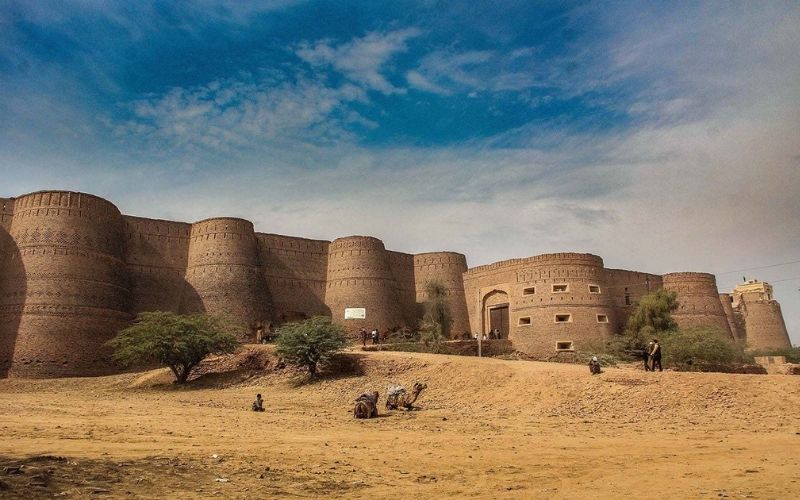
Derawar Fort was originally built by the Bhunis Rajput clan in the 9th century and later renovated by the Nawabs of Bahawalpur in the 18th century. It served both as a defensive stronghold and a symbol of power over the Cholistan region.
Key historical points:
- Controlled desert trade routes and regional settlements
- Served as a royal residence for the Nawabs during certain periods
- Witnessed battles and strategic negotiations over centuries
Its rich history reflects the resilience and influence of local rulers in pre-colonial Punjab.
Unique Desert Architecture
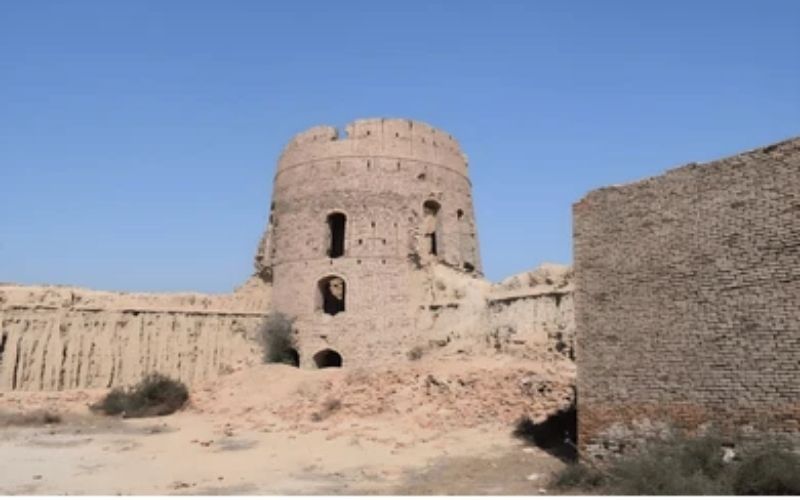
Derawar Fort is renowned for its massive walls and 40 bastions, showcasing ingenuity in desert construction.
Architectural highlights:
- 30-meter high walls made of baked bricks
- Symmetrical square layout for defense and surveillance
- Minimalist design optimized for desert climate
The fort’s distinctive architecture makes it an extraordinary example of desert fortifications worldwide.
Visiting Derawar Fort Safely
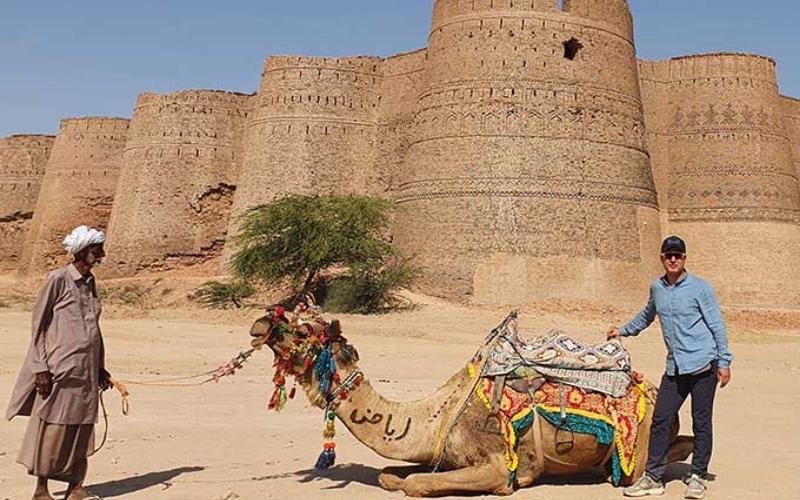
Derawar Fort is located deep within the Cholistan Desert, so careful planning is required for visits.
Visitor tips:
- Best visited from October to March to escape extreme heat
- Travel with a guide or local transportation for safety
- Carry sufficient water, sun protection, and snacks
- Respect local regulations and heritage preservation rules
Hiran Minar: A Unique Mughal Monument of Love & Nature
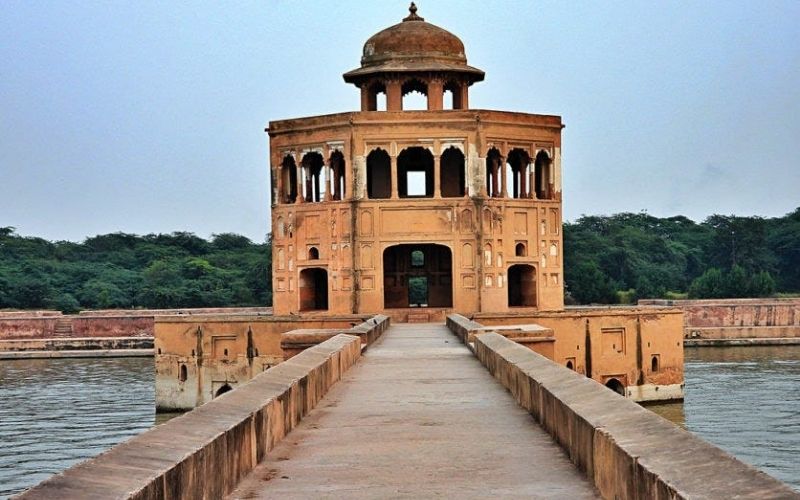
Hiran Minar, located near Sheikhupura, Punjab, is a unique Mughal-era monument built as a tribute to Emperor Jahangir’s beloved pet antelope. This site combines romantic history, architectural elegance, and natural beauty, making it one of the best historical sites in Pakistan for both heritage and leisure tourism.
The monument is celebrated for its distinctive octagonal tower, surrounding water tank, and serene environment, offering visitors a peaceful retreat with historical context.
Historical Background & Purpose
Hiran Minar was constructed in the 17th century during Emperor Jahangir’s reign. It served both as a memorial to his pet and as a hunting lodge in the lush grounds of Sheikhupura.
Key points:
- Symbol of Mughal affection for nature and animals
- Served as a royal leisure and hunting site
- Represents a blend of personal and imperial architectural expression
Its story of love and memory gives Hiran Minar a unique narrative among Mughal monuments.
Architectural Structure
The monument features:
- Octagonal tower rising from a central water tank
- Raised walkways and pavilions surrounding the tank
- Symmetrical Mughal garden layout
The harmonious combination of water, architecture, and greenery demonstrates the Mughal’s aesthetic sophistication.
Things to Do & Nearby Attractions
Visitors to Hiran Minar can enjoy:
- Walking along the water tank’s perimeter
- Exploring the historic tower and nearby hunting lodge ruins
- Birdwatching and photography in the lush surroundings
- Visiting Sheikhupura Fort and nearby Mughal-era sites
Noor Mahal: Royal Palace of Bahawalpur
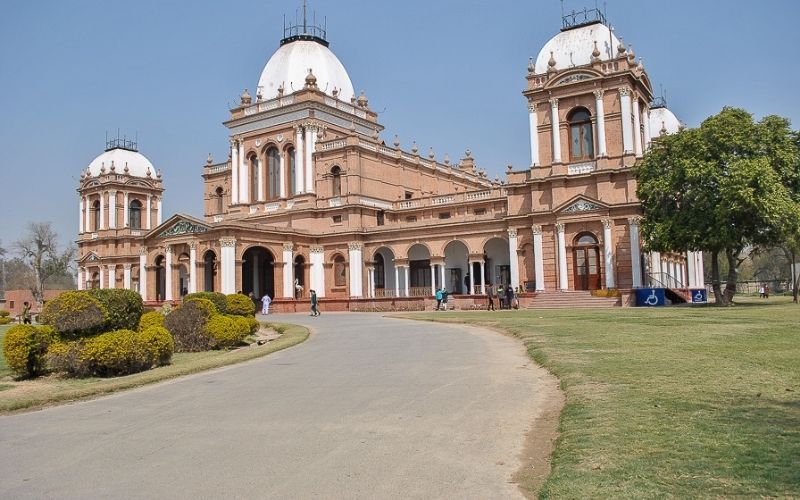
Noor Mahal, located in Bahawalpur, Punjab, is an exquisite Mughal-inspired palace and one of the best historical sites in Pakistan for exploring royal lifestyle and architectural splendor. Built in the 19th century by Nawab Sadiq Muhammad Khan IV, the palace reflects a blend of European and Mughal architectural styles.
Noor Mahal stands as a symbol of the grandeur of the Bahawalpur state and continues to attract tourists, historians, and architecture enthusiasts.
Palace History & Royal Lifestyle
Noor Mahal was constructed as a residential palace for the Nawab and as a venue for official state functions.
Highlights:
- Showcases the lifestyle of the Bahawalpur royal family
- Hosted high-profile gatherings and ceremonies
- Reflects the cultural prosperity of the Bahawalpur princely state
Its history offers a glimpse into Pakistan’s royal heritage and administrative traditions during the 19th century.
Interior Design & Palace Features
The palace’s interiors are as remarkable as its exterior, featuring luxurious and intricate design elements.
Key features:
- Ornate chandeliers, marble flooring, and lavish furnishings
- Stained glass windows and elaborate wall paintings
- A blend of classical European and Mughal motifs
Visitors can experience a unique combination of royal elegance and architectural finesse.
Directions & Visitor Information
Noor Mahal is easily accessible for travelers visiting Bahawalpur and nearby attractions.
Visitor guidance:
- Located in the heart of Bahawalpur city
- Open to public tours with guided services available
- Best visited during morning or late afternoon hours for photography
Makli Necropolis: The World’s Largest City of Tombs
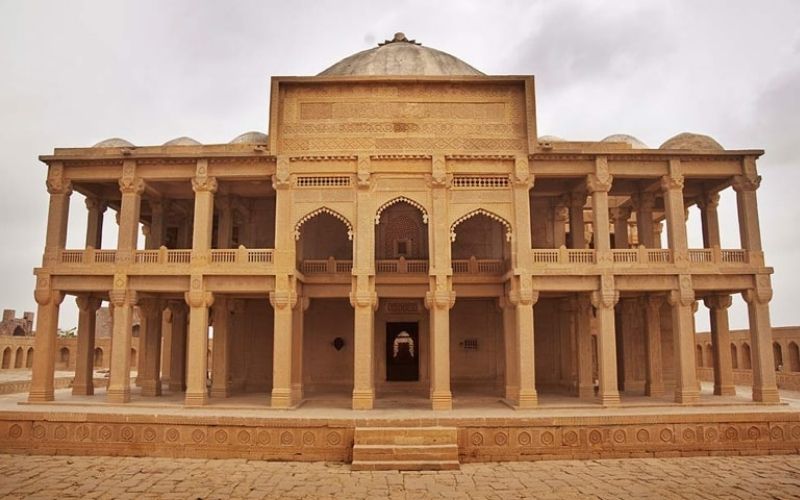
Makli Necropolis, located near Thatta in Sindh, is one of the largest funerary sites in the world and a key entry among the best historical sites in Pakistan. Spanning over 10 square kilometers, this UNESCO World Heritage Site houses thousands of tombs, mausoleums, and monuments that date back 500 years, representing different dynasties and architectural styles.
Makli Necropolis is not only a historical treasure but also a remarkable showcase of Sindhi culture, craftsmanship, and spiritual heritage.
Historical Importance of Makli
Makli served as a royal burial ground for Sindhi rulers, Sufi saints, and nobility, reflecting centuries of regional history.
Key highlights:
- Tombs of Samma, Arghun, and Tarkhan dynasties
- Rich representation of Islamic funerary architecture
- Insights into social hierarchies and cultural traditions
This historical depth makes Makli a must-visit site for both scholars and travelers.
Famous Tombs & Architectural Styles
Makli Necropolis is renowned for its variety of tombs, each with unique features and artistic expression.
Notable architectural aspects:
- Ornate carvings, lattice work, and domes
- Mix of Hindu, Islamic, and Persian influences
- Monumental tombs such as that of Jam Nizamuddin II
The fusion of styles showcases centuries of artistic evolution and religious harmony.
Cultural & Religious Significance
Beyond its architectural marvels, Makli Necropolis holds profound cultural and spiritual importance.
Significance includes:
- Place of pilgrimage and historical reflection
- Symbol of Sindh’s enduring Sufi and Islamic traditions
- Cultural resource for historians and archaeologists
Baltit & Altit Forts: Himalayan Heritage of Hunza Valley
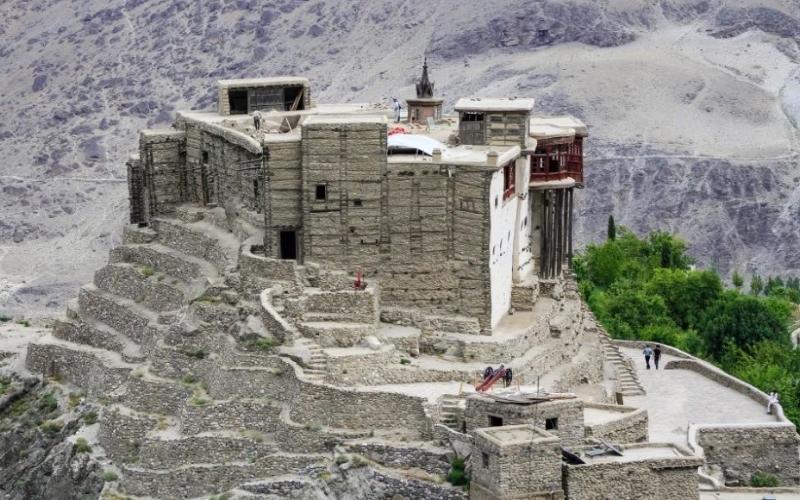
Baltit and Altit Forts, located in the Hunza Valley, are two of the most visually stunning and historically significant sites in northern Pakistan. These forts are among the best historical sites in Pakistan, reflecting centuries of local governance, trade, and cultural heritage in the Himalayas.
Perched on strategic hilltops, both forts offer panoramic views of the valley and showcase the architectural ingenuity of the region.
History of the Hunza Forts
Altit Fort is the older of the two, dating back over 900 years, while Baltit Fort was rebuilt around 700 years ago with Tibetan and Islamic influences.
Historical highlights:
- Served as residences for the ruling Mirs of Hunza
- Key defense points controlling trade and travel routes
- Witnessed political and cultural transformations in the region
The forts’ history encapsulates Hunza Valley’s rich legacy of leadership and resilience.
Strategic Location & Architecture
The forts were strategically placed to provide both defense and oversight of trade routes.
Architectural features:
- Multi-story wooden and stone construction
- Unique cantilevered balconies and watchtowers
- Adaptation to seismic activity and mountainous terrain
The combination of strategic location and innovative design makes these forts remarkable examples of Himalayan architecture.
Why These Forts Are a Must-Visit in Northern Pakistan
Visitors are drawn to Baltit and Altit Forts for their historical, architectural, and scenic appeal.
Highlights for tourists:
- Insight into Hunza’s governance and royal life
- Panoramic views of Hunza Valley and surrounding peaks
- Museums showcasing local artifacts, clothing, and culture
Important Religious & Cultural Historical Sites
Pakistan’s historical landscape is enriched by religious and cultural landmarks, which reflect centuries of spiritual devotion, artistry, and cultural diversity. From majestic mosques to intricately designed sacred spaces, these sites are essential stops for travelers seeking to explore the top historical sites in Pakistan beyond forts and ancient ruins.
This section centralizes important religious heritage, providing both historical context and visitor guidance.
Notable Mosques & Religious Sites
- Badshahi Mosque, Lahore
- Built in 1673 CE by Emperor Aurangzeb
- One of the largest mosques in the world
- Known for red sandstone architecture, grand courtyards, and decorative frescoes
- Built in 1673 CE by Emperor Aurangzeb
- Wazir Khan Mosque, Lahore
- Constructed in 1634–1641 CE
- Famous for intricate faience tile work and frescoes
- Located in Lahore’s historical Walled City
- Constructed in 1634–1641 CE
- Shah Jahan Mosque, Thatta
- Built during Shah Jahan’s reign in the 17th century
- Celebrated for its blue tile mosaics and seven-domed prayer hall
- Recognized for acoustics and aesthetic harmony
- Built during Shah Jahan’s reign in the 17th century
- Mahabat Khan Mosque, Peshawar
- Built in 1630 CE
- Features detailed stone carvings and Mughal-era architectural elements
- Built in 1630 CE
- Sunehri Masjid, Lahore
- Known as the Golden Mosque for its gilded domes
- Constructed in the early 18th century
- Represents Mughal architecture’s elegance and devotion
- Known as the Golden Mosque for its gilded domes
Historical Gardens, Tombs & Lesser-Known Heritage Sites
Pakistan’s historical richness extends beyond forts and major religious sites to gardens, tombs, and hidden gems that offer unique cultural and architectural experiences. These locations are essential for travelers seeking a comprehensive exploration of the best historical sites in Pakistan.
Notable Gardens
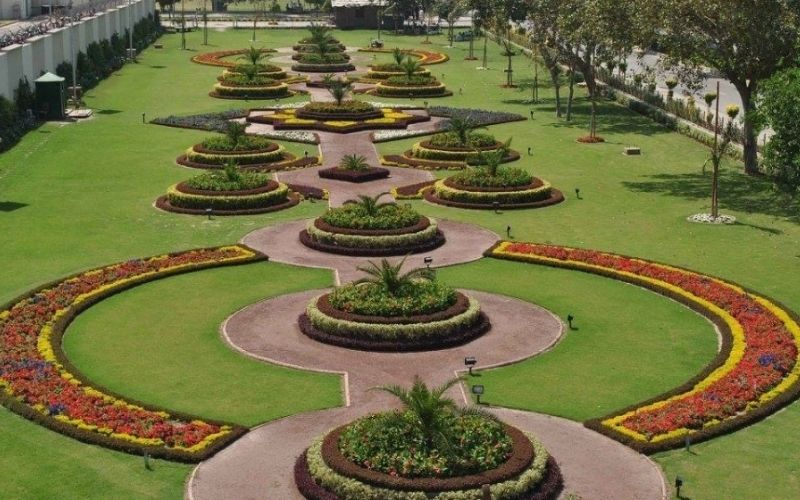
- Shalimar Gardens, Lahore
- Built by Emperor Shah Jahan in 1641 CE
- Classic Mughal garden layout with terraces, fountains, and pavilions
- UNESCO World Heritage Site
- Built by Emperor Shah Jahan in 1641 CE
- Bagh-e-Jinnah, Lahore
- Colonial-era botanical garden with historical monuments
- Includes Quaid-e-Azam Library and cricket ground
- Popular for leisure and photography
- Colonial-era botanical garden with historical monuments
Prominent Tombs
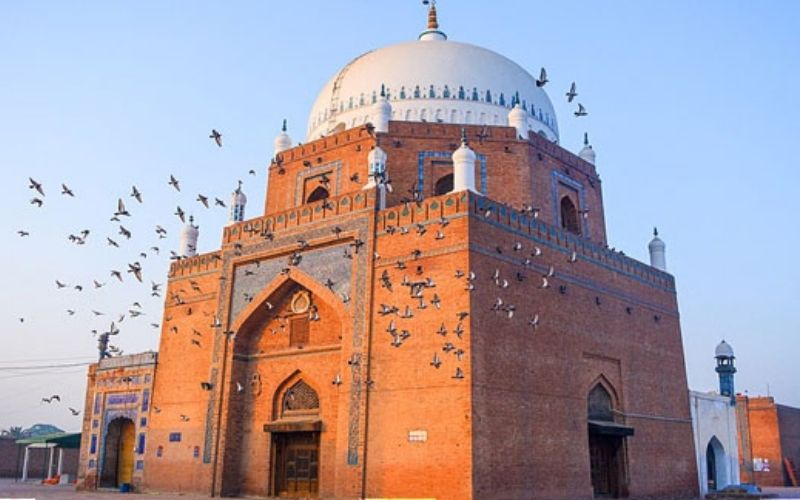
- Jahangir’s Tomb, Lahore
- Built in 1627 CE
- Magnificent Mughal architecture with marble and fresco work
- Surrounded by well-maintained Mughal-style gardens
- Built in 1627 CE
- Iqbal’s Tomb, Lahore
- Burial site of Allama Iqbal, Pakistan’s national poet
- Modern architectural style with landscaped surroundings
- Cultural and national significance
- Burial site of Allama Iqbal, Pakistan’s national poet
Lesser-Known Heritage Sites
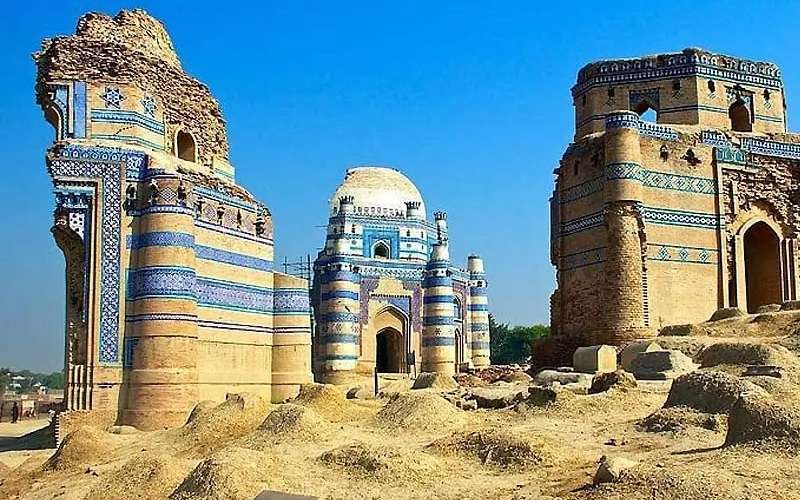
- Uch Sharif
- Historical town with multiple Sufi shrines
- Known for tombs with intricate glazed tile work
- Cultural and spiritual importance
- Historical town with multiple Sufi shrines
- Nagarparkar Jain Temples, Sindh
- Ancient Hindu temples with unique architectural designs
- Highlights Pakistan’s religious diversity
- Less frequented, ideal for niche heritage tourism
- Ancient Hindu temples with unique architectural designs
Travel Maps & Planning Guide for Historical Sites in Pakistan
Planning a visit to Pakistan’s historical sites can be overwhelming due to the country’s vast cultural and geographical diversity. This section provides a practical guide for travelers to efficiently explore the best historical sites in Pakistan, including regional breakdowns, travel routes, and safety considerations.
Regional Breakdown
Punjab
- Major Landmarks: Lahore Fort, Badshahi Mosque, Wazir Khan Mosque, and Shalimar Gardens
- Katas Raj Temples and Derawar Fort
Sindh
- Mohenjo-Daro, Makli Necropolis, Nagarparkar Jain Temples
Khyber Pakhtunkhwa
- Takht-i-Bahi, Mahabat Khan Mosque
Northern Areas / Gilgit-Baltistan
- Baltit & Altit Forts, Skardu historical sites
Suggested Travel Routes
- Northern Heritage Circuit
- Hunza Valley → Baltit & Altit Forts → Skardu → Shigar Fort
- Hunza Valley → Baltit & Altit Forts → Skardu → Shigar Fort
- Punjab & Cholistan Loop
- Lahore → Katas Raj Temples → Derawar Fort → Bahawalpur → Noor Mahal
- Lahore → Katas Raj Temples → Derawar Fort → Bahawalpur → Noor Mahal
- Sindh Exploration
- Karachi → Makli Necropolis → Moenjodaro → Nagarparkar
- Karachi → Makli Necropolis → Moenjodaro → Nagarparkar
Safety & Accessibility Tips
- Travel with reliable local guides or tour operators
- Ensure transportation and accommodations are booked in advance
- Check weather conditions for northern or desert regions
- Respect local customs, religious practices, and heritage preservation rules
- Carry maps, water, and essential supplies for remote locations
Best Time to Visit Historical Places in Pakistan
Timing your visit to Pakistan’s historical sites is crucial for an enjoyable experience. Weather, seasonal festivals, and regional conditions all impact accessibility and comfort. This section helps travelers plan the best time to explore the top historical sites in Pakistan.
Seasonal Comparison
- Spring (March – May)
- Pleasant temperatures and blooming landscapes
- Ideal for visiting northern forts, gardens, and open-air archaeological sites
- Recommended sites: Baltit & Altit Forts, Shalimar Gardens, Katas Raj Temples
- Pleasant temperatures and blooming landscapes
- Summer (June – August)
- High temperatures in plains; cooler climates in mountains
- Perfect for northern valleys and forts like Hunza and Skardu
- Suggested: Baltit Fort, Altit Fort, Taxila, Harappa
- High temperatures in plains; cooler climates in mountains
- Autumn (September – November)
- Moderate weather and golden landscapes
- Great for exploring historical ruins and desert forts
- Recommended: Derawar Fort, Lahore Fort, Makli Necropolis
- Moderate weather and golden landscapes
- Winter (December – February)
- Snow in the north; mild temperatures in south
- Ideal for southern heritage sites and desert forts
- Recommended: Derawar Fort, Noor Mahal, Mohenjo-Daro
- Snow in the north; mild temperatures in south
Weather Considerations
- Northern regions: Snow may block roads; carry warm clothing
- Desert regions: Daytime heat can be extreme; stay hydrated
- Southern plains: Monsoon season (July–August) may affect travel
Festival & Cultural Timing
Visiting during festivals can enhance the experience:
- Eid and cultural festivals in Lahore, Bahawalpur, and Sindh
- Religious events at Katas Raj and Makli Necropolis
- Local fairs in Hunza Valley showcasing traditional culture
Tips for Visiting Historical Sites Responsibly
Preserving Pakistan’s historical sites is a shared responsibility. Responsible tourism ensures that future generations can continue to experience these best historical sites in Pakistan while respecting local culture and heritage.
Key Guidelines
- Preservation Awareness
- Avoid touching or climbing fragile structures
- Do not remove artifacts or souvenirs from heritage sites
- Support conservation efforts through entry fees or donations
- Avoid touching or climbing fragile structures
- Dress Code & Cultural Respect
- Modest attire is recommended, especially at religious sites
- Respect prayer areas and avoid disruptive behavior
- Be mindful of photography restrictions
- Modest attire is recommended, especially at religious sites
- Photography & Media Etiquette
- Ask for permission when photographing local people
- Avoid drone photography in restricted zones
- Share responsibly to promote awareness of heritage preservation
- Ask for permission when photographing local people
- Environmental Responsibility
- Dispose of trash properly
- Avoid plastic bottles and single-use items when possible
- Follow marked paths to minimize environmental impact
- Dispose of trash properly
Why These Historical Places Make Pakistan a Global Tourism Gem
Pakistan’s historical sites are not just national treasures they are globally significant landmarks that reflect the country’s cultural diversity, architectural brilliance, and ancient civilizations. These sites position Pakistan as a prime destination for international heritage tourism.
Cultural Diversity
- Multiple civilizations: Indus Valley, Gandhara, Mughal, and regional kingdoms
- Religious heritage: Hindu temples, Buddhist monasteries, Islamic mosques, and Sufi shrines
- Architectural variety: Forts, palaces, gardens, tombs, and necropolises
This rich cultural mosaic offers travelers a unique blend of history, spirituality, and artistry.
Global Heritage Recognition
- UNESCO World Heritage Sites: Mohenjo-Daro, Rohtas Fort, Lahore Fort, Takht-i-Bahi, Baltit & Altit Forts
- International scholars and historians study these sites for their archaeological and architectural significance
- Conservation and preservation efforts contribute to global cultural knowledge
Tourism Growth Potential
- Increasing domestic and international visitors
- Emerging heritage tourism circuits connecting northern, central, and southern Pakistan
- Opportunities for cultural tours, photography, and educational visits
Final Thoughts: Exploring Pakistan’s Timeless History
Pakistan is a land where ancient civilizations, royal heritage, and spiritual landmarks converge to create a rich tapestry of history. From the ruins of Mohenjo-Daro and Harappa to the grandeur of Mughal forts and palaces, and the serenity of sacred temples and tombs, the country offers an unparalleled journey through time.
Traveling to these best historical sites in Pakistan is more than sightseeing; it is an immersive experience that connects visitors to the stories, artistry, and cultures that shaped South Asia. Each monument, garden, and necropolis tells a unique tale of human ingenuity, faith, and resilience.
Whether you are a history enthusiast, a culture seeker, or a casual traveler, Pakistan’s historical landscape promises adventure, learning, and inspiration. Responsible exploration and appreciation of these sites ensure that future generations can continue to enjoy this rich heritage.
FAQs
Here are some frequently asked questions to help travelers plan visits to the best historical sites in Pakistan and understand their significance.
Q1: What are the best historical sites to visit in Pakistan?
A: Some of the must-visit historical sites include Mohenjo-Daro, Harappa, Lahore Fort, Rohtas Fort, Takht-i-Bahi, Baltit & Altit Forts, Derawar Fort, Hiran Minar, Noor Mahal, Makli Necropolis, and Katas Raj Temples.
Q2: Which historical sites in Pakistan are UNESCO World Heritage Sites?
A: Pakistan has several UNESCO-recognized sites:
- Mohenjo-Daro – Indus Valley Civilization
- Rohtas Fort – 16th-century fortress
- Lahore Fort and Shalimar Gardens – Mughal heritage
- Takht-i-Bahi – Buddhist monastic complex
- Baltit & Altit Forts – Hunza Valley heritage
Q3: What is the best time to visit historical sites in Pakistan?
A: The best time depends on the region:
- Spring (March–May): Pleasant weather, blooming landscapes
- Summer (June–August): Cooler northern areas; avoid plains heat
- Autumn (September–November): Ideal for desert forts and ruins
- Winter (December–February): Best for southern and desert regions
Q4: Are there any travel tips for visiting these historical sites?
A: Yes!
- Dress modestly, especially at religious sites
- Hire local guides for historical insights
- Carry water and essentials for desert or mountainous regions
- Respect cultural norms and preservation rules
Q5: How can I explore multiple historical sites efficiently?
A: Plan regional travel circuits:
- Northern Heritage Route: Baltit & Altit Forts → Skardu → Shigar Fort
- Punjab & Cholistan Loop: Lahore → Katas Raj Temples → Derawar Fort → Bahawalpur
- Sindh Exploration: Karachi → Makli Necropolis → Moenjodaro → Nagarparkar
Q6: Are there lesser-known historical sites worth visiting?
A: Absolutely!
- Nagarparkar Jain Temples – Sindh
- Uch Sharif Sufi Shrines – Punjab
- Shalimar Gardens – Lahore
- These provide cultural richness and are less crowded.